
A Little Timeliness

Dear Jaybook Friends, hello!
A question: where does time actually go? Such a question suggests that it comes from somewhere, arrives, and passes on. But there is some form of residue — delicious burdens is the term I like best. As an entity through which time passes, this imaginary filtration causes me to experience the shape of the world, a geography, an atmospheric rollicking, as I, a fixed point, filters an essence.
I’ve been thinking about time again from a variety of angles. I guess it is autumn after all, which is always a season of reflection and introspection. But Book*hug Press is celebrating twenty years this autumn. This is somewhat false, since the first book I ever produced was printed and bound in 1992. I’m hesitant to say “published” because that word — publish — has come to mean something else since I started playing this game. It is a much larger word now than it was, and undoubtedly the term has grown because of how time has passed through me.
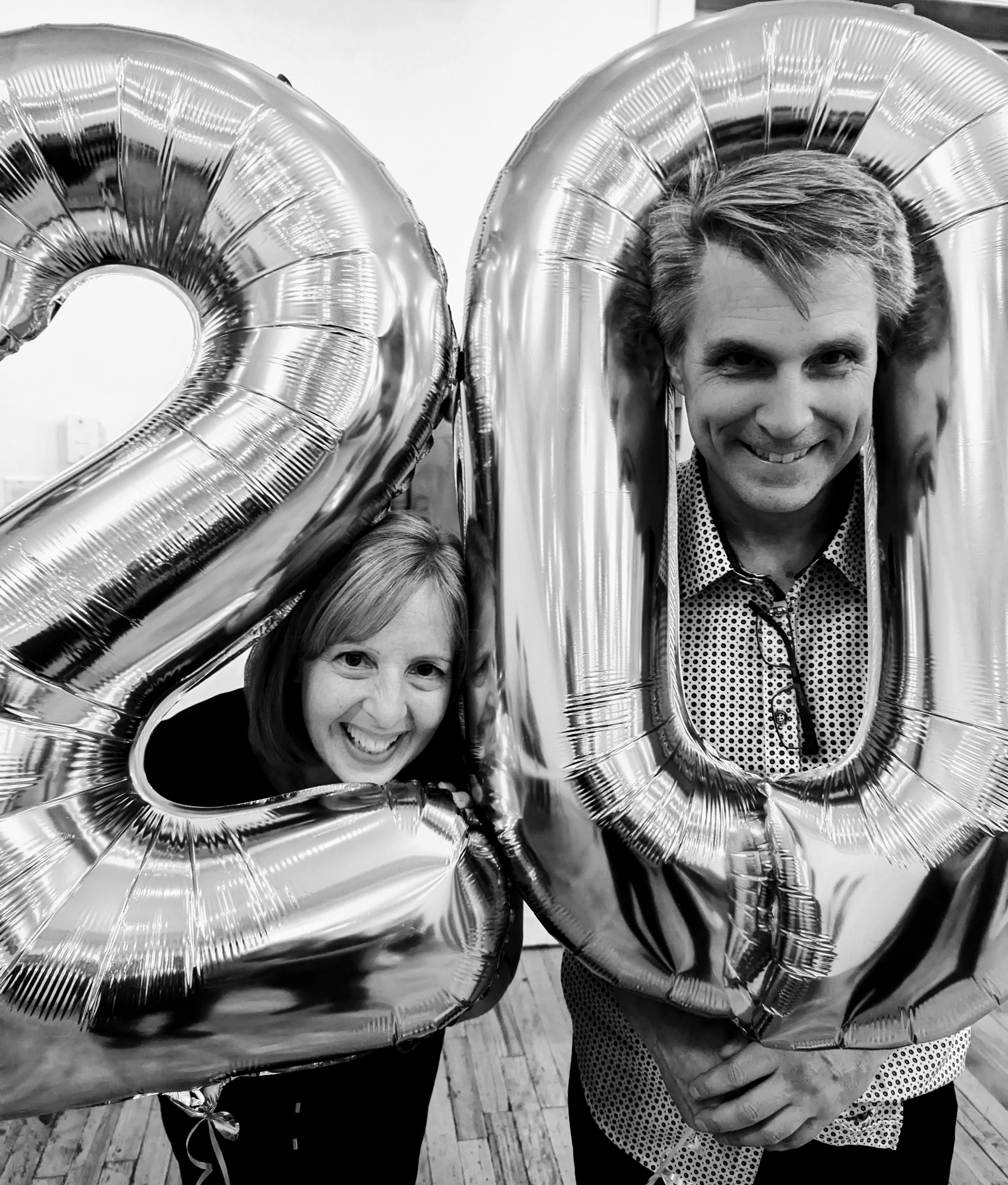
Twenty years of anything is cause for celebration, so we threw a party. Which was lovely, and if you were there, thank you so much for coming. It was wonderful to see you, and to celebrate this moment with you. If you were not there for whatever reason, you were still there in some capacity — a lot of people passed through my mind: dare I say my own personal form of community. But an anniversary is a moment. Time has passed. Marking a moment fixes something, and it invents a past, but it also projects the idea of a future. When I think about how different the world was twenty years ago (let alone thirty-two years ago) I get a little tripped up. What have I absorbed from the time that passed through me? Is its consumption causing me to overlook the present? Does it cause me to project a future like a hovering dream of magical thinking?
In my spare moments this past week I’ve been cataloguing a small collection of Canadian poetry for Apollinaire’s Bookshoppe, some of which have appeared on the shoppe’s Instagram page. A box of time. I enjoyed the experience — I’d almost forgotten the soothing wash that is the act of cataloguing books, considering their physical attributes, their page counts and dimensions, their place in the constellation of book history, and ultimately, their value. When I am cataloguing books I am suspended in a version of time, but I am also passing time. Because it is based on the physical objects I’m considering, most of it — I’d say almost everything except for value — is very real. The value of a book is always imaginary. After all, a book is really only worth what someone is willing to pay for it. And in my experience, people don’t really want to pay much. The joke about Apollinaire’s Bookshoppe is that I’m selling the books that no one wants to buy. I confess I’ve been undervaluing the books I’ve been cataloguing — sometimes pricing them at half of what I believe their worth to be. Mostly because I have this weird feeling these days — both as a bookseller and as a publisher — that in a general cultural sense, books do not have much value.
The names that emerged from that box bare some historically significant weight. Associations were founded by them. Prizes have been named after them. They once had influence, publishing themselves and helping to publish others. Or they simply kept on writing. Culture builders in one form or another. They put in their time, and they are now, for the most part, forgotten. Almost as a reward for their contribution to the history of the world. I find it humbling, knowing that these people did their work, contributed something, helped to support culture in some form, became recognizable figures, and eventually entered the past tense in a literal way (sometimes after growing old, sometimes not), and are now rarely, if ever, discussed. I have wondered sometimes if naming prizes or naming anything after a person actually aids in their erasure. No longer humans, perhaps, now flat and one dimensional, a thing. And the prize becomes its own brand, defined more by the institutions that administer them or by the writers who are shortlisted for and/or win them. I have wondered if writers today who have been nominated for a prize named after a dead writer know anything about the human the prize was named after. Do they know if they liked baseball, or ham and cheese sandwiches? Who were their favourite writers? Can they see a multitudinous figure in the shadow of their name? Have they even read their work, and wondered at how their own work relates?
All of this has to do with time. The time I am passing through now has very little to do with the time those humans passed through, and it shows. There is disconnect, even if you can draw a line between now and then. I recognize that I am working at something in the same tradition, something that, at least for me, is connected to the past (and it is a long tradition) even if it tends to work very hard to appear forward facing. I confess I’m a little skeptical of that idea. I long ago lost faith in the ideology of the avant-garde for more than one reason; mostly I dislike that the term comes from military terminology. But it is hard to think that anything is forward facing if one has come to realize that it is the past that is before us, while the future is always sneaking up on us from behind. And I sometimes feel as though part of the current cultural agenda is, for better or for worse, to dismiss the past for one reason or another. Everyone is stuck in their time, or rather, is filtering it somehow in large or narrow ways, and ultimately each of us invents a number of concepts to deal with it so you won’t go insane. And sometimes that involves erasure.
As Hazel and I have been releasing new books into the world this fall I have been simultaneously looking back, considering these books of yore and the writers who composed them. I’ve been looking in two directions at once. Which is kind of like looking nowhere, really. Or everywhere. The smallness of the past, which is huge, I find both fascinating and annoying. And twenty (thirty-two) years is enough time that I can look back and see the fascinating yet annoying small thing that is either the head or the tail of what I’m doing. Which makes the present ever more important. All I can say about all that time is that has been unquestionably been an adventure, this much is for sure, and in that, it is very satisfying. One of my favourite things about the first book I ever produced is that it helped me to meet Hazel. But that’s a story for another time.
Good things to you all, and thanks for reading — I hope you have a fantastic weekend. If you are in Toronto this weekend please come and visit Book*hug Press at Harbourfront where we will be selling books with other publishers from 11am to 5pm as part of TIFA’s Small Press Book Fair. If you follow the link you’ll see Hazel at last year’s fair speaking with Jessica Bebenek, who’s debut poetry collection No One Knows Us There will be published by Book*hug Press in 2025 — a fitting photo from the past that also involves the future.